A Brief History of Portable Shelter
The tent is arguably humanity's oldest piece of manufactured architecture. Long before we learned to stack stones into walls, we learned to stretch animal skins over poles. The oldest known evidence of tent-like structures dates back roughly 40,000 years — Neanderthals and early Homo sapiens both built temporary shelters using mammoth bones and hides in cold climates across Eurasia.
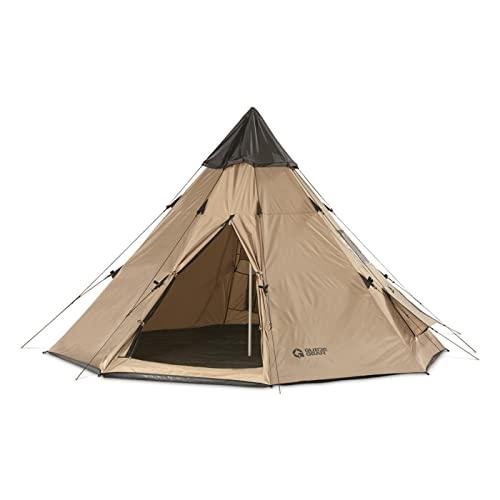
Nomadic civilizations perfected the form. The Mongolian ger (commonly called a yurt in the West) has remained virtually unchanged in design for over a thousand years — a circular latticed framework covered with felt or canvas, engineered to be assembled and disassembled in under an hour. The Bedouin tent of the Arabian Peninsula, woven from goat or camel hair, was designed to breathe in heat and insulate against cold night desert temperatures. These weren't primitive solutions. They were precisely calibrated responses to specific climates and lifestyles.
The modern camping tent as we know it emerged in the late 19th and early 20th centuries alongside the rise of recreational outdoor culture. Early mountaineering expeditions to the Alps and later the Himalayas drove rapid innovation. Weight became a concern. Wind resistance became a science. The famous Whymper tent — used on early Matterhorn ascents — would be recognized by any modern camper as a direct ancestor of today's designs.
Understanding Tent Anatomy
Before diving into types and comparisons, it helps to understand what a tent actually consists of. Modern tents are deceptively complex systems, not just fabric thrown over poles.
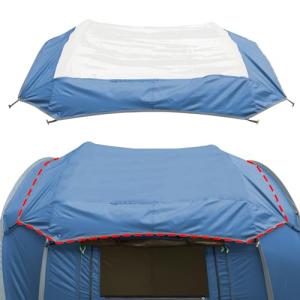
The fly is the outer waterproof layer. It sheds rain, blocks wind, and in double-wall designs, creates a critical insulating air gap between the outside world and the interior. A good fly extends low to the ground, covering the tent's vulnerable points. A cheap fly leaves gaps that betray you at 2am during a storm.
The inner tent (or inner body) is typically a mesh or breathable fabric layer that provides ventilation and a barrier against insects. In double-wall designs, it stays dry even during rain because the fly handles precipitation. In single-wall designs, there is no separate inner — the outer shell does everything, which saves weight but invites condensation problems.
The poles are the skeleton. They determine shape, internal volume, and resistance to wind load. Aluminum alloy poles — particularly those made from aircraft-grade 7000-series aluminum — have become the gold standard for most four-season and backpacking tents. Fiberglass poles are cheaper and appear on budget tents, but they crack under cold stress, and they're heavy. Carbon fiber poles exist at the extreme ultralight end, offering incredible rigidity at minimal weight, at a price that makes you reconsider your choices.
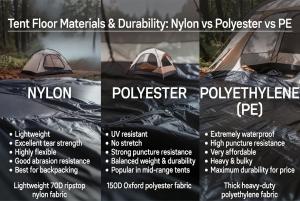
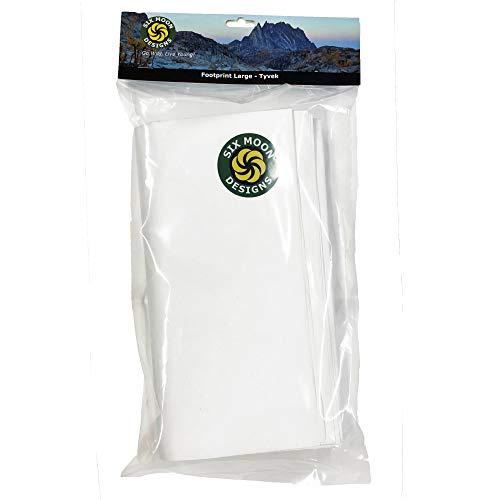
The footprint, often sold separately, is a groundsheet cut to match the tent's floor. It protects the floor from abrasion and puncture, extends the tent's life considerably, and adds a marginal layer of insulation from cold ground.
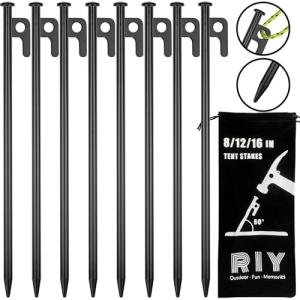
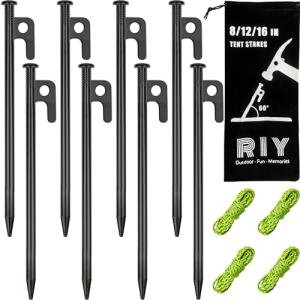
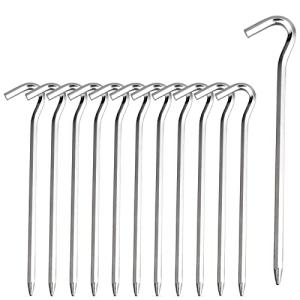
Stakes and guylines are often underestimated. A tent's stated weather resistance means nothing if it isn't properly staked out. In serious wind, a tent that isn't guyed out becomes a kite. Good guylines tensioned to solid stakes are the difference between a comfortable night and a disaster.
The Main Types of Tent — What They're Actually For
Three-Season Tents
The three-season tent is the workhorse of recreational camping and backpacking. Designed for spring, summer, and fall conditions, these tents prioritize ventilation (to handle warm nights and condensation), relative weather resistance (they can handle moderate rain and wind), and packability.
Most backpackers live and die by three-season tents. They are generally lighter than four-season alternatives, less expensive, and better ventilated. The trade-off is that they are not designed to handle heavy snow loads, sustained high winds above treeline, or genuine winter conditions.
A good three-season tent will have a full-coverage fly, multiple interior pockets for organization, a vestibule for storing muddy boots and wet gear, and poles that can handle a moderate storm. Mesh inner panels help manage condensation during warmer months.
Four-Season (Winter) Tents
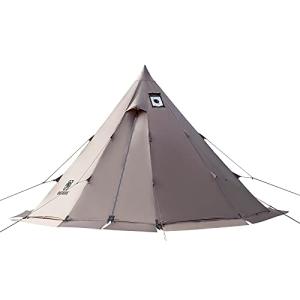
Four-season tents are a different animal. Built for sustained harsh weather — high winds, heavy snow, below-freezing temperatures — these are the tents used by mountaineers, polar explorers, and anyone camping seriously in winter.
The design philosophy reverses in several key ways. Ventilation is reduced in favor of insulation. Pole structures become more complex — often featuring additional crossing poles — to handle snow load and wind pressure. Flies extend fully to the ground. Most fabric in four-season tents is solid rather than mesh to keep heat in and drafts out.
What you gain in protection you sacrifice in weight and ventilation. Four-season tents are heavier, hotter in temperate conditions, and more expensive. Bringing a four-season tent on a summer backpacking trip is like wearing a winter parka in July — technically possible, frequently miserable.
Ultralight Backpacking Tents
The ultralight movement in outdoor gear has produced a category of tent that borders on philosophical. These shelters — many using trekking poles instead of dedicated tent poles, some weighing under 500 grams for a one-person setup — represent the engineering edge of what's possible.
Dyneema Composite Fabric (DCF, formerly known as Cuben Fiber) is the miracle material of ultralight shelters. Stronger than steel by weight, completely waterproof, and practically weightless, it has allowed designers to create shelters that protect against serious weather while barely registering on a scale. The catch is cost — a DCF tent routinely runs into the four-figure range.
Ultralight tents often sacrifice interior volume, ease of setup, and robustness for weight savings. They're not for everyone. But for thru-hikers covering thousands of miles, where every gram matters over hundreds of days, they represent a legitimate and carefully considered trade-off.
Car Camping and Family Tents
Car camping tents operate under entirely different constraints. When weight is irrelevant because your tent travels in a trunk, you can prioritize space, comfort, and ease of setup over every other consideration.
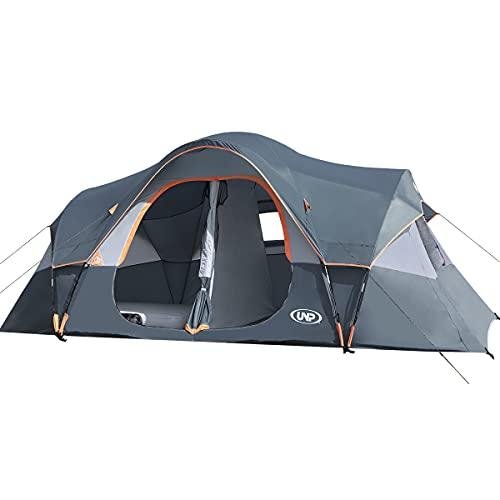
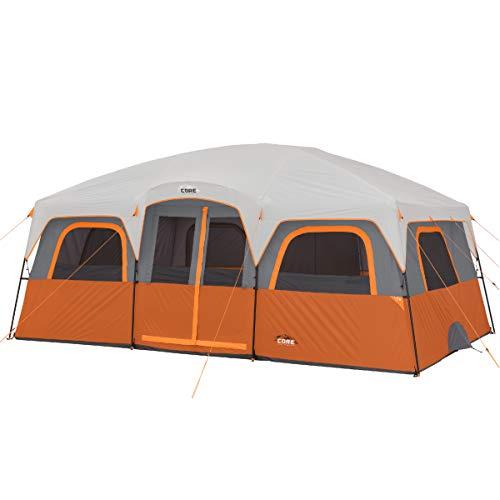
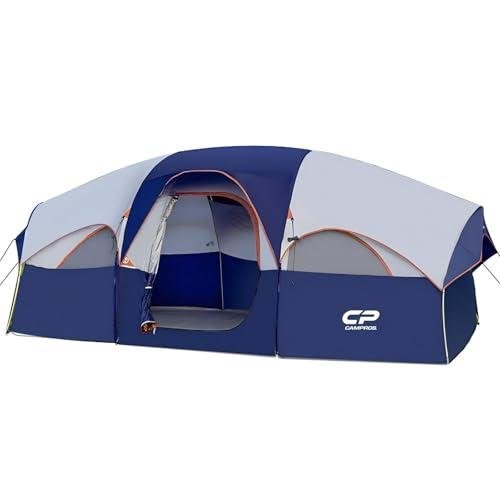
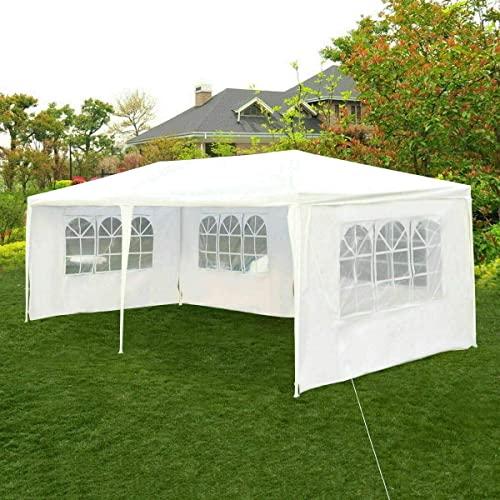
This is where you find cabin-style tents with vertical walls and near-standing headroom, multi-room designs with divider panels for privacy, and pop-up tents that deploy in seconds. These tents often sleep four to eight people and include features like lantern hooks, gear lofts, and electrical cord ports for connecting to a campsite power hookup.
The main risks with car camping tents are durability and weather resistance. The market is saturated with tents that look impressive in a parking lot display and fail catastrophically in actual rain. Seam sealing, floor thickness, and fly coverage are the most critical factors to examine when evaluating a car camping tent.
Bikepacking and Ultracompact Shelters
A specialized cousin of the ultralight category, bikepacking shelters must fit into small frame bags and handlebar bags while remaining functional. Bikepackers tend to favor bivouac-style shelters, tarps with trekking poles, or very compact one-person designs that prioritize packability above all else.
What the Specifications Actually Mean
Tent marketing is full of numbers that can mislead as easily as they inform. A few worth decoding:
Waterproofing (hydrostatic head) is measured in millimeters — the height of a water column a fabric can withstand before leaking. A floor rating of 3,000mm is generally considered minimum for a quality camping tent; 5,000mm or above is better. Fly ratings of 1,500-2,000mm are common and typically adequate for most conditions, but seam sealing matters as much as raw fabric rating.
Stated capacity is almost always optimistic. A manufacturer's "two-person" tent typically fits two adults shoulder to shoulder with no room for gear. Experienced campers frequently buy one size up — a three-person tent for two people gives workable space for gear storage and comfortable movement.
Setup time claims should be viewed with skepticism. The number on the box assumes you've practiced the setup in your living room multiple times, in daylight, at room temperature. Your first real setup will take longer. Practice at home before you go.
The Geometry Question — Shapes, Poles, and Interior Space
One of the least-discussed but most practically important aspects of tent design is geometry. The shape of a tent determines everything from how it handles wind to how much usable sleeping space it actually offers.
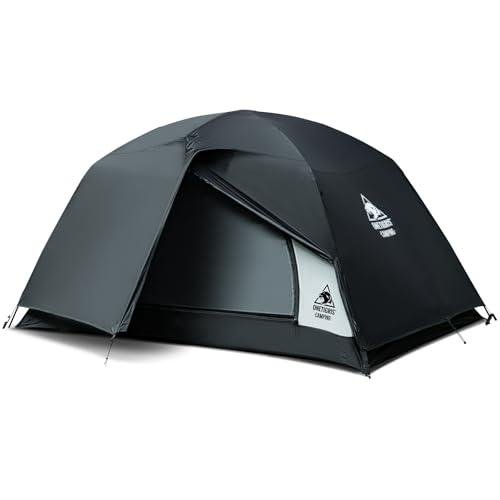
Dome tents — the default shape for most three-season backpacking tents — use two crossing poles to create a freestanding structure. They're self-supporting (they don't require staking to hold their shape), shed wind reasonably well, and are relatively easy to set up. The weakness of classic dome designs is that the walls slope in sharply, meaning the stated floor area is misleading — you can only sit upright in the very center.
Geodesic tents use three or more poles crossing in complex patterns to create a structure that distributes load across the entire frame rather than concentrating it at a few points. This is why high-altitude mountaineering tents are geodesic — the design handles wind and snow from any direction without a single structural weakness. They're harder to pitch, heavier, and more expensive, but in severe conditions they earn every extra gram.
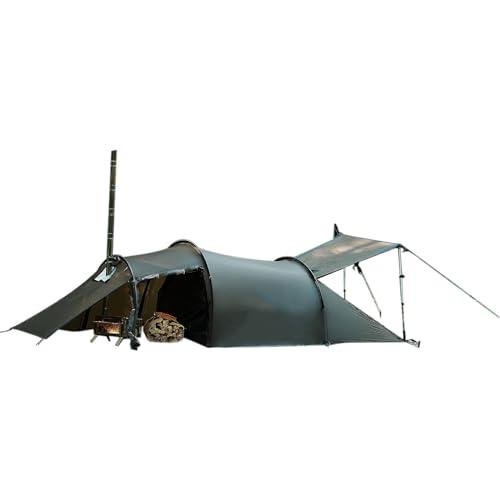
Tunnel tents trade the freestanding quality of dome designs for superior interior space-to-weight ratio. Using two or three parallel hoop poles, tunnel tents create long, relatively spacious interiors with vertical walls that make the stated sleeping area actually usable. The trade-off is that they must be staked out properly — without stakes, they collapse. They also perform best when oriented correctly into the wind; catch a tunnel tent broadside in a gale and you'll understand why orientation matters.
Tarp shelters and tarps represent the minimalist extreme. A single sheet of waterproof fabric, pitched with trekking poles and stakes in various configurations, can create a remarkably effective shelter at a fraction of the weight and cost of a structured tent. Tarps require skill to pitch well — particularly in high winds or complex terrain — and offer no protection from insects without a separate inner or bivy sack. But for experienced backcountry travelers, they offer a freedom and simplicity that structured tents cannot match.
Condensation — The Problem Nobody Talks About Enough
Ask any experienced camper about their most frustrating camping experiences and condensation will feature heavily in the answers. Inside a tent at night, your breath, your body heat, and any moisture in your gear create humidity. That humidity needs somewhere to go. In a well-designed double-wall tent with adequate ventilation, it migrates through the mesh inner, hits the cooler fly, condenses on the inside of the fly, and runs down harmlessly to the ground. When something goes wrong in this equation — poor ventilation, a fly pitched too close to the inner, cold temperatures that push the condensation point inside the inner — you wake up with a wet sleeping bag and a cold, miserable morning.
Single-wall tents — common in ultralight designs — struggle most with condensation because there is no air gap between you and the outer shell. On cold nights, moisture can condense directly on the walls around you. Good single-wall tent designs mitigate this with strategic ventilation and by using partially breathable fabrics, but the physics of the situation are inherently challenging.
The practical advice: always leave your tent vents open. Even in cold weather, some airflow is better than none. Pitch your fly taut so it doesn't touch the inner. If condensation is heavy, take time each morning to air out your tent before packing. These habits extend the life of your sleeping bag and make camping measurably more pleasant.
Caring for a Tent — The Habits That Double Its Lifespan
A quality tent, properly maintained, can last a decade or more. The same tent, neglected, can fail within a few seasons. The differences in care are small but cumulative.
Never pack a wet tent for storage. A tent stuffed wet and left in a garage develops mildew, which destroys fabrics and causes waterproofing to fail. Dry your tent fully before long-term storage — pitch it in the sun if possible, or drape it over furniture indoors.
Store your tent loosely, not compressed. The stuff sack that comes with a tent is designed for carrying, not storage. Long-term compression damages pole elastic cords and can stress seams and coatings. Store your tent loosely in a large mesh bag or draped over a shelf.
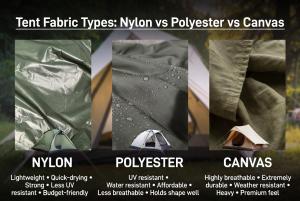
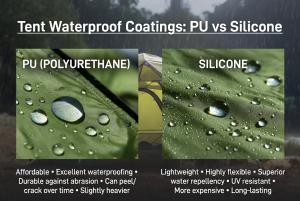
Reapply DWR (durable water repellent) treatment periodically. The waterproof coating on your fly degrades over time and with UV exposure. When you notice water soaking into the fly fabric rather than beading and running off, it's time for a refresh. DWR spray products are widely available and take minutes to apply.
Seams need periodic attention. Seam sealing — applying a liquid sealant along the stitched seams where needle holes create potential leak points — should be done before the first use on many tents and refreshed every few seasons. It's tedious but effective.
The Decision That Actually Matters
After all the specifications, comparisons, and material science, the tent decision really comes down to a single question: Where are you going, and what conditions will you actually face?
A beginner camper driving to a national park campground with friends doesn't need a geodesic four-season tent with DCF construction. An experienced thru-hiker completing a 4,000-kilometer trail doesn't want a ten-kilogram cabin tent. A family camping three weekends a year needs something entirely different from a mountaineer attempting a Himalayan peak.
Buy for the trip you're actually taking, not the fantasy version of yourself that summits eight-thousanders. Start with less expensive gear while you develop preferences and understand what you actually use. The tent that gets used is infinitely more valuable than the premium shelter sitting in a closet because it requires too much skill or commitment to deploy.
And when you finally zip yourself into whatever shelter you've chosen — whether it's a thousand-euro ultralight marvel or a forty-euro festival tent from a hardware store — the fundamental experience is unchanged from what it was for every human who slept under a stretched skin forty thousand years ago. You are inside. The weather is outside. The fabric between you and the night sky holds.
That's all a tent has ever needed to do.
Quick Reference — Choosing Your First or Next Tent
Here's a brutally honest summary to cut through the noise:
Weekend camper driving to established campgrounds: A decent three-season tent in the $150–$300 range will serve you well for years. Prioritize ease of setup, a full-coverage fly, and a vestibule for shoes and gear.
Backpacker carrying everything on their back: Budget $300–$600 for a quality three-season backpacking tent under 2kg. At this price point, you get durable aluminum poles, reliable waterproofing, and a design that has been field-tested. Go lighter when you understand why you want to.
Winter and alpine camping: Don't compromise. A four-season tent from a reputable brand is not optional in serious winter conditions — it's a safety decision. Budget $500–$1,000 and treat it as the long-term investment it is.
Thru-hikers: Research obsessively, rent before buying if possible, and weigh everything. The ultralight market moves fast and forums like r/ultralight are genuinely useful for current real-world reviews.
Family camping: Prioritize headroom, vestibule space, and a fly that actually covers the entire tent. Don't trust stated capacities — size up by at least one.
The tent industry has never offered better options at more accessible prices than it does now. The challenge isn't finding a good tent — it's finding the right tent for you specifically. Ask the right questions, be honest about your actual use case, and the market will provide.
Good camping begins before you leave home.