Ask ten campers what they look for in a tent and you'll hear the same answers: waterproof fly, good ventilation, easy setup. The floor barely gets a mention. Yet the floor is the one piece of fabric that takes a beating from both directions simultaneously — moisture and cold pushing up from the ground, the full weight of your body and gear pressing down.
A tent can have the most breathable canopy and the most aerodynamic pole structure on the market, and if the floor fails, none of that matters. You're sleeping in a puddle. Or worse, on a slow damp that you don't notice until you wake up in a wet sleeping bag at 3 a.m., forty miles from the nearest trailhead.
This guide is for people who actually use tents — not just set them up in the backyard and put them back in the garage. If you're heading into the backcountry, camping in mud-heavy climates, or simply tired of replacing tents that should have lasted longer, understanding floor materials is the single best investment of attention you can make.
The Core Problem: Ground Contact Is Brutal
The ground is not neutral terrain. It's wet, rough, chemically active (acidic soil degrades certain fabrics), and cold. A tent floor faces hydrostatic pressure — the physical force that pushes water upward through fabric when weight is applied to saturated ground. It faces abrasion from rocks, roots, pine cones, and compacted dirt. It absorbs UV damage at the edges where sunlight hits the base. And it gets folded and unfolded hundreds of times over a tent's lifetime, stressing the same seams repeatedly.
The material a manufacturer chooses for the floor is a direct statement about how long that tent is expected to survive, and in what conditions. Knowing the difference between those materials changes how you shop — and how you camp.
Nylon: The Workhorse Floor Material
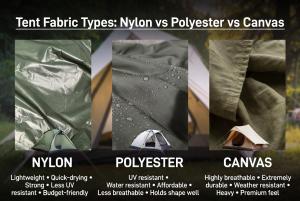
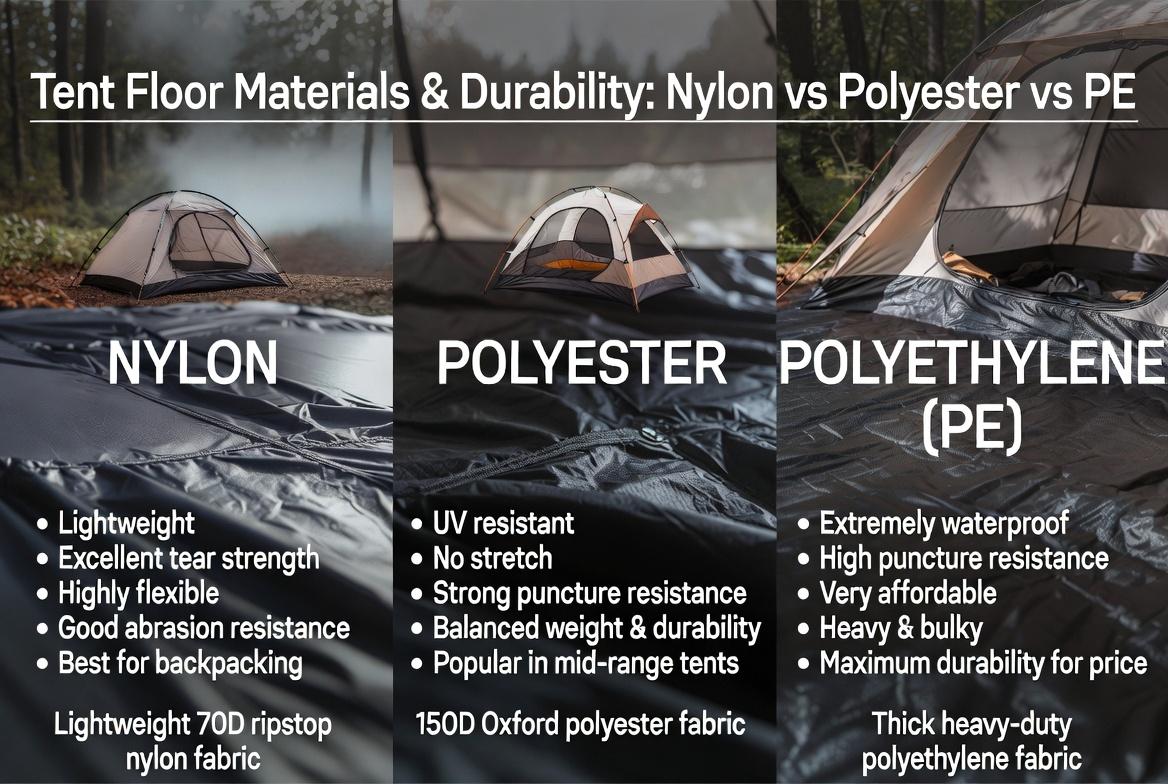
Nylon has dominated tent floor construction for decades because it does several things well at once. It's lightweight, packs down small, resists tearing, and takes polyurethane (PU) coatings reliably.
Most quality backpacking tents use nylon floors rated between 1500mm and 3000mm hydrostatic head (HH). That rating tells you how many millimeters of water column the fabric can resist before water pushes through. A 1500mm floor is acceptable for dry summer camping. Anything below that is a gamble in rain.
Denier matters here. Denier (D) is the unit of measurement for fabric thread weight — a higher number means thicker, heavier threads, which generally means more abrasion resistance. Backpacking tent floors typically run from 20D to 70D nylon. Ultralight floors like 15D exist but sacrifice longevity. A 30D nylon floor coated to 3000mm HH hits a solid middle ground for most three-season use.
The weakness of nylon is that PU coatings degrade over time, particularly when stored wet or compressed for long periods. After five to seven years of regular use, hydrostatic resistance drops. Re-coating is possible but adds maintenance.
Companies like MSR (4000 First Ave S, Seattle, WA 98134) have built reputations on high-denier nylon floors with welded seams rather than sewn, eliminating the needle-hole leakage problem that plagues cheaper construction.
Polyester Floors: Better UV Resistance, Less Stretch
Polyester is nylon's quieter cousin in the tent world. It doesn't stretch as much when wet, which means a polyester floor maintains its geometry under sustained moisture. It also resists UV degradation significantly better than nylon — relevant for desert camping or extended trips in high-altitude sun.
The trade-off is weight. Polyester threads are denser than nylon at equivalent denier, so a polyester floor adds grams. In car camping, this is irrelevant. In ultralight backpacking, those grams matter.
Polyester floors also tend to hold PU coatings slightly longer than nylon because the material absorbs less moisture itself, reducing the cycle of swelling and contracting that breaks down coatings.
Big Agnes (2406 13th St, Steamboat Springs, CO 80487) uses polyester floors in several of their basecamp-oriented tents precisely because of this UV resilience argument.
Polycarbonate and Silicone-Coated Floors: The High-End Option
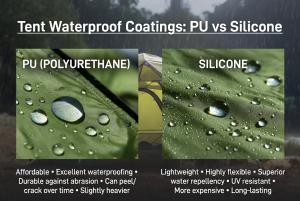
For those willing to pay more, silicone-coated (silnylon or sil-poly) fabrics represent a meaningful step up. A silicone coating on both sides of the floor fabric creates a layer that doesn't hydrolize the way PU does. Silicone-treated floors hold their waterproof rating for far longer — sometimes twice as long as PU equivalents.
Silnylon is lighter than silpoly at the same waterproof performance. Silpoly doesn't stretch when wet, which makes it more dimensionally stable. Both cost more to manufacture and require seam sealing with silicone-specific sealant rather than standard polyurethane tape.
Zpacks (185 Cedar Lane, Columbia Falls, MT 59912), specialists in ultralight gear, builds floors using DCF (Dyneema Composite Fabric) and silicone-treated nylon for their premium shelters. DCF floors are exceptionally waterproof and incredibly light — but they are crinkly, puncture when folded sharply, and cost significantly more than conventional options.
Bathtub vs. Flat Floor Construction
Beyond material choice, floor construction type shapes durability more than many buyers realize.
A bathtub floor extends floor material up the tent wall several inches — typically 6 to 8 inches — before transitioning to the canopy fabric. This construction wraps the sleeping area in an unbroken waterproof barrier. Even in standing water, the floor-to-wall junction sits above the waterline. Seams are high enough off the ground that they don't face direct water pressure.
A flat floor construction places the floor-to-wall seam at ground level. It's cheaper to manufacture and weighs slightly less, but that seam sits in the most vulnerable position possible: directly in water flow during heavy rain.
For serious camping in wet climates — think Pacific Northwest trails, Scottish highlands, Scandinavian forests — a bathtub floor isn't optional. It's the design feature that keeps you dry when everything else is soaked.
Seam Construction: Where Most Floors Actually Fail
The weakest point of any floor isn't the fabric itself. It's the seams. A 3000mm-rated fabric connected with uncoated stitching is a tent that will leak the first time it rains hard. Water finds needle holes. Always.
Factory-taped seams use waterproof tape bonded over the stitch line, covering those holes. This should be standard on any tent above entry-level price. Factory-welded seams — used by MSR and a few others — bond the fabric without stitching, eliminating needle holes entirely.
Some tents ship requiring field seam sealing — the buyer applies seam sealant before first use. This is fine when disclosed, but it's extra work and requires getting it right. Check whether seams are factory-sealed before purchasing.
What Hydrostatic Head Ratings Actually Tell You (And What They Don't)
The hydrostatic head (HH) number on a tent spec sheet is a laboratory measurement. A 3000mm HH floor was tested under still, controlled conditions, not while you were rolling over onto a rock in a thunderstorm.
Practical performance depends on:
- How the test was conducted (different standards across manufacturers)
- Coating age (ratings degrade as coatings break down)
- Abrasion history (scuffs reduce coating integrity)
- Seam quality (a 5000mm floor with unsealed seams leaks at 0mm)
A general guide: 1500mm is minimum for light rain. 2000–3000mm handles most three-season use. 3000mm+ is appropriate for prolonged wet-weather camping. In the UK, where most outdoor retailers sell to a rain-heavy customer base, Rab and Hilleberg both spec floors at 5000mm or higher for expedition use.
Hilleberg (US distribution: Hilleberg the Tentmaker, 1 Cabela Dr, Sidney, NE 69160) uses Kerlon fabric — a proprietary woven nylon with silicone treatment — on their floors with 5000mm HH as standard. Their tents are built to be used for decades, not seasons.
Material Comparison Table
Here's a direct breakdown of the most common tent floor materials:---
Footprints and Groundsheets: The Underfloor Defense Layer
Even the best tent floor benefits from a footprint — a cut-to-fit groundsheet placed under the tent. This sacrificial layer absorbs the abrasion that would otherwise go directly into your floor.
Proprietary footprints designed to match tent dimensions are convenient but expensive. A sheet of polycro (polyethylene film used in the building trade) cut slightly smaller than the tent floor does the same job for a fraction of the price. The key detail: cut it slightly smaller than the floor so water can't funnel beneath the tent by running off the footprint and pooling underneath.
Many experienced campers pair a 15D ultralight floor with a 40-gram polycro footprint rather than buying a 70D floor and carrying more weight. The math favors the system approach.
Temperature and Floor Insulation: Often Overlooked
Water resistance isn't the only floor performance metric. Cold ground pulls heat from your sleeping bag with significant efficiency. Most tent floors offer negligible thermal insulation — they're thin fabrics optimized for weight and waterproofing, not warmth.
Winter campers and shoulder-season backpackers should account for this. A closed-cell foam sleeping pad provides both insulation and a secondary puncture barrier. An inflatable pad without a foam layer works fine in temperatures above freezing; below that, the air inside the pad chills, and you're relying entirely on pad R-value for warmth.
Therm-a-Rest (4000 1st Ave S, Seattle, WA 98134 — sharing the SOU campus with Cascade Designs) has long communicated R-value ratings for sleeping pads. Matching your pad's R-value to expected ground temperatures is as important as your sleeping bag rating.
How Long Should a Tent Floor Last?
With proper care, a quality tent floor should last between seven and fifteen years. The range is wide because it depends heavily on use patterns, storage habits, and materials.
A silnylon or silpoly floor stored clean and dry, used forty nights a year, can last a decade or more with periodic seam maintenance. The same floor left wet in a stuff sack, stored in a hot attic, and dragged over granite will show failure within three years.
The most common failure modes are:
Delamination — the PU coating peels away from the base fabric in strips or sheets, leaving the fabric permeable. This smells like vinegar or fish when it happens. The floor is effectively finished at this point.
Seam failure — tape lifts, stitching pulls, or needle holes open up after coating degradation. Field-repairable with sealant if caught early.
Abrasion wear-through — visible fabric thinning or actual holes, typically under sleeping area hip zones. A ground footprint prevents this almost entirely.
Caring for Your Tent Floor: Practical Habits That Add Years
Longevity is mostly behavioral. The floor doesn't wear out from use — it wears out from how you use it and store it.
Set up on cleared ground when possible. Removing pine cones, pinecones and sharp stones before pitching takes two minutes and saves coating integrity across hundreds of nights. Never pitch directly on compacted gravel without a footprint. Sweep out the tent before breakdown — trapped grit becomes an abrasive every time you pack and unpack.
Dry the tent completely before storage. This is the single most important habit. Damp storage accelerates PU hydrolysis — the chemical breakdown that causes delamination. After wet trips, set the tent up at home or drape it over a fence or drying rack. Never leave it in a stuff sack while damp.
Store loosely, not compressed. Roll the floor loosely or fold along different crease lines each time. Repeated folding at the same crease fatigues the fabric and coating at that line.
Wash with a soft sponge and cold water. No machine washing, no hot water, no detergents. These strip DWR treatments and accelerate coating breakdown.
Matching Floor Material to Your Camping Style
This is where general advice needs to become specific. There's no universal best floor material because there's no universal camper.
Weekend warrior, car camping, mixed weather: A 70D polyester or high-denier nylon floor with factory-sealed seams and 3000mm HH rating. Comfort over weight savings. Most Coleman and REI Co-op base camp tents land here.
Three-season backpacker, moderate distance: 30D–40D nylon or polyester, 3000mm HH, silicone or PU coated, bathtub construction. The sweet spot for 90% of backpackers. MSR, Big Agnes, and Nemo dominate this category.
Thru-hiker, ultralight philosophy: 20D silnylon or DCF floor, paired with a polycro footprint. Minimal weight with maintained waterproofing over the duration of a long trail.
Expedition camper, four-season or high-altitude use: Kerlon or high-denier silpoly, 5000mm HH minimum, factory-welded seams. Budget for premium options. Hilleberg and Black Diamond (2084 East 3900 South, Salt Lake City, UT 84124) build for this category.
The Honest Verdict
Most people are over-buying fly performance and under-speccing floors. The floor is in contact with the environment all night, every night. It bears your weight, faces ground moisture, takes abrasion from below, and is the one piece of your tent you can't easily replace.
Understanding the difference between a 20D nylon floor and a silpoly floor, or between a flat-seam construction and a bathtub, is not gear nerding. It's making a practical decision that will affect your sleep quality and your wallet over the next ten years.
Buy the floor that matches your conditions. Use a footprint. Dry it before storage. Those three decisions add up to a tent that lasts.
References and further reading: MSR gear care guides available at msrgear.com; Big Agnes care instructions at bigagnes.com; Hilleberg material specifications at hilleberg.com.